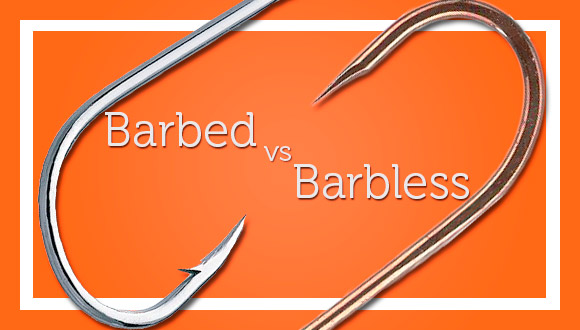
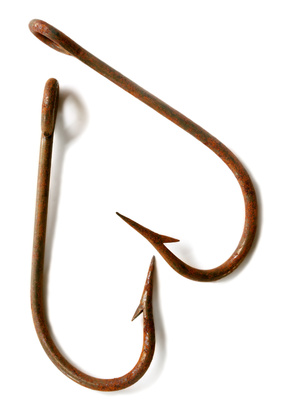
A barbed hook has a small backward-facing spike near the point that keeps a fish from slipping off once it’s hooked. A barbless hook doesn’t, either ground down, pinched flat, or made without one from the start. That’s the entire technical difference. Everything else, hook-up rates, fish mortality, how hard a fish fights, comes down to that one small piece of metal.
For years when I was starting out, I fished barbed flies almost exclusively, which is standard for most anglers learning the sport and especially years ago before barbless hooks became more prevalent. Eventually I started digging into what that barb was actually doing to the fish, and it changed how I fish for good. Here’s the real case for barbed vs barbless hooks, both sides, and why I made the switch.
Barbed vs Barbless Hooks? Which Way Should I Go?
Most people fish barbed flies today. You’ll probably hear people talk about how horrible this is for the fish and their health as well. You’ll also probably hear arguments against fishing barbless hooks as well. So how do you know which way is better? As you already know, there are two sides to the story here. I’m a firm believer in one of those sides as you’ll soon find out.
Argument for Barbed Hooks
The proponents of barbed fishing hooks are everywhere. I’d bet that 99% or more people out there who started fishing and fly fishing started out doing so with barbed hooks. It’s the norm. It’s the standard. I will admit there are benefits of using barbed hooks while fishing. A few such benefits are:
- Keeps the fish hooked in one spot
- Less chance of losing fish
- No worries about crimping barbs before you head out
- Every shop sells barbed flies
Those are just a few arguments for the benefits of using barbed fishing hooks. I have no problem with any of these and will admit that 90% of the flies I purchase are barbed. I then spend an hour or so crimping all of them, which admittedly is a pain to do. I’ve broken many a hook in the process as well. Doing so on a $5.00 fly you just bought is a tough pill to swallow. However, there are a few downsides to barbed hooks, such as:
- Higher mortality rate for fish due to increase damage from extracting barb
- When you accidentally stick yourself, it’s a much worse experience to extract the hook
- Fish that break off cannot shake the hook that is attached and must wait for it to rust off
- Hooks broken off on a fish can impede their ability to eat
As you can see, the pros and cons (at least those I’ve listed) pretty much equal each other out. However, I’d like to present one of the those downsides more clearly.
Higher Mortality Rate with Barbed Hooks
The mortality rate is a measure of the number of deaths (in general, or due to a specific cause) in a population, according to Wikipedia. In this instance it basically means that it is the number of fish that die due to a certain cause, as in the damage caused by the barb being extracted. Studies have shown that in some cases the mortality rate of fish is almost double when using barbed hooks (check here for a few statistics and references). To me, fish are a precious resource that must be taken care of. And so anything I can do to reduce the amount of deaths to these fish is a worthy thing to do.
It is just like limits placed on the amount of fish one can keep from a river or lake. Those regulations are in effect to help preserve the fishery for future generations. Being a catch and release fisherman is a great idea as it helps this same cause all while still allowing us to pursue a sport that we all thoroughly enjoy. However, catch and release angling is far less effective when fishing barbed hooks due to the damage it causes to the fish. If you’re planning to keep the fish within the regulated limit, I don’t see much problem with using barbed hooks. It is the catch and release aspect that I firmly believe barbed hooks cause more damage than good.
 Barbless Fly Hooks for Fly Tying View on Amazon
 Barbless Trophy Trout Flies 24pk View on Amazon
 36 Tungsten Bead Perdigon Nymphs View on Amazon
 Dr. Slick 5.5" Scissor Clamp View on Amazon
Argument for Barbless Hooks
The information above presents my point fairly clearly. But if you aren’t aware of the benefits of using barbless hooks, I’d like to present a few that I feel are worth a mention:
- Lower mortality rate to fish
- Easier to extract from fish
- Allows for quicker release of the fish
- Easier to remove from yourself if accidentally hooked
- More challenging to fish with
- Flies broken off can easily fall out of a fish’s mouth
Those are just a few of the benefits of barbless hooks. You may be wondering why I’d say they are more challenging to fish with though. That leads me to a few of the drawbacks of barbless hooks, and then I’ll clarify my view on the challenge.
- Easier to lose a hooked fish
- Potential to unhook and rehook the same fish
- Painstaking process of removing barbs from hooks (by filing or crimping)
The first point there is that it is easier to lose a fish hooked on a barbless fly. This is true and there are no arguments against that. However, does this not make fighting those fish that are hooked all the more of a challenge? I think so. You have to be more conscious of the pressure and angles of the fish. You have to be aware of what the fish is doing and where it’s going in order to not provide that small amount of slack for the fish to throw the hook. To me that is a challenge and one that I look forward to. It adds another dimension to this sport that only adds to the enjoyment one has when out on the water.
Frequently Asked Questions
It’s exactly what it sounds like: a hook without that small backward-facing point near the tip that normally keeps a fish from shaking free. Most barbless hooks are made that way from the factory, or you can pinch the barb down on a regular hook with a pair of pliers. Either way, the point still hooks and holds a fish, it’s just far easier to remove once you’ve landed it.
A barbed hook has that extra point that grabs tissue and makes it harder for a fish to throw the hook, which also makes it harder to remove. A barbless hook skips that point entirely. You’ll lose a few more fish on the fight since there’s less holding power, but you get a fish that’s easier and faster to release, with less damage done in the process.
Yes. Studies on the subject have shown barbed hooks can nearly double the mortality rate in some cases, mostly from the extra tissue damage caused when you work the barb back out. Barbless hooks slide out clean, which means less trauma and a much better shot at a healthy release.
Not everywhere, but plenty of catch and release waters and some fisheries require barbless hooks by regulation, specifically because of the lower mortality rate for released fish. Always worth checking the specific rules for the water you’re fishing before you tie on.
The simplest way is pinching it down with a pair of forceps or needle-nose pliers right at the barb. Press firmly until it flattens against the shank. It takes some practice and you’ll snap a hook here and there in the process, but it’s a quick fix you can do streamside in a few seconds once you’re used to it. If you can find them, purchasing or tying flies on hooks with the barb already removed is my preferred option.
Final Thoughts on Barbed vs Barbless Hooks

If you haven’t already guessed, I’m a huge proponent of fishing with barbless hooks. I’m not saying that anyone that fishes with barbed hooks is a monster and shouldn’t be allowed to fish. I’d never say that. We are all fisherman in this great sport and we each choose a different way to experience it. I used barbed hooks for the majority of my fly fishing life. Only a few years back I made the switch to barbless and have been a firm believer in that choice ever since. My only hope is to provide information on the subject to allow any fisherman out that to make an educated choice on the barbed vs barbless hooks decision.
I’m probably not the first to say that barbless hooks are harder to fish with. It is a challenge as previously stated and one that does take time to get used to. But it’s all in the spirit of progression and furthering our skills as anglers. I highly recommend you try it out. If you decide to go back, that’s perfectly alright. Although some of you may try barbless and never want to go back. I’ll step down from my soapbox now. Tight lines everyone and if you have any comments or questions, please feel free to leave them below.